Herringbone
Ashgrove Herringbone
A 2/2 twill threaded to a point and reversed every six ends, in undyed moss and oat wool.…
gsm480
cm150
Every fabric here is specified the way a weaver writes it — a threading, a tie-up, a treadling. The cloth on this page is not a photograph. It is that notation, woven live in your browser.
On the loom: Ashgrove Herringbone — Herringbone
Undyed British wool — Masham and Bluefaced Leicester · 8 ends/cm
Move across the cloth
A weaver never draws the cloth. They write which shaft carries each warp end, which shafts each treadle lifts, and which treadle is pressed for each pick. The interlacement — the thing you actually see — falls out of those three. So does the pattern: houndstooth is not a picture anyone drew, it is what a 2/2 twill does when the warp and weft are both banded four dark, four light.
Top block. One mark per warp end, on the shaft that carries it.
Top right. Which shafts each treadle raises.
Right column. The order the treadles are pressed, pick by pick.
The field. Never written by hand — it is computed from the other three.
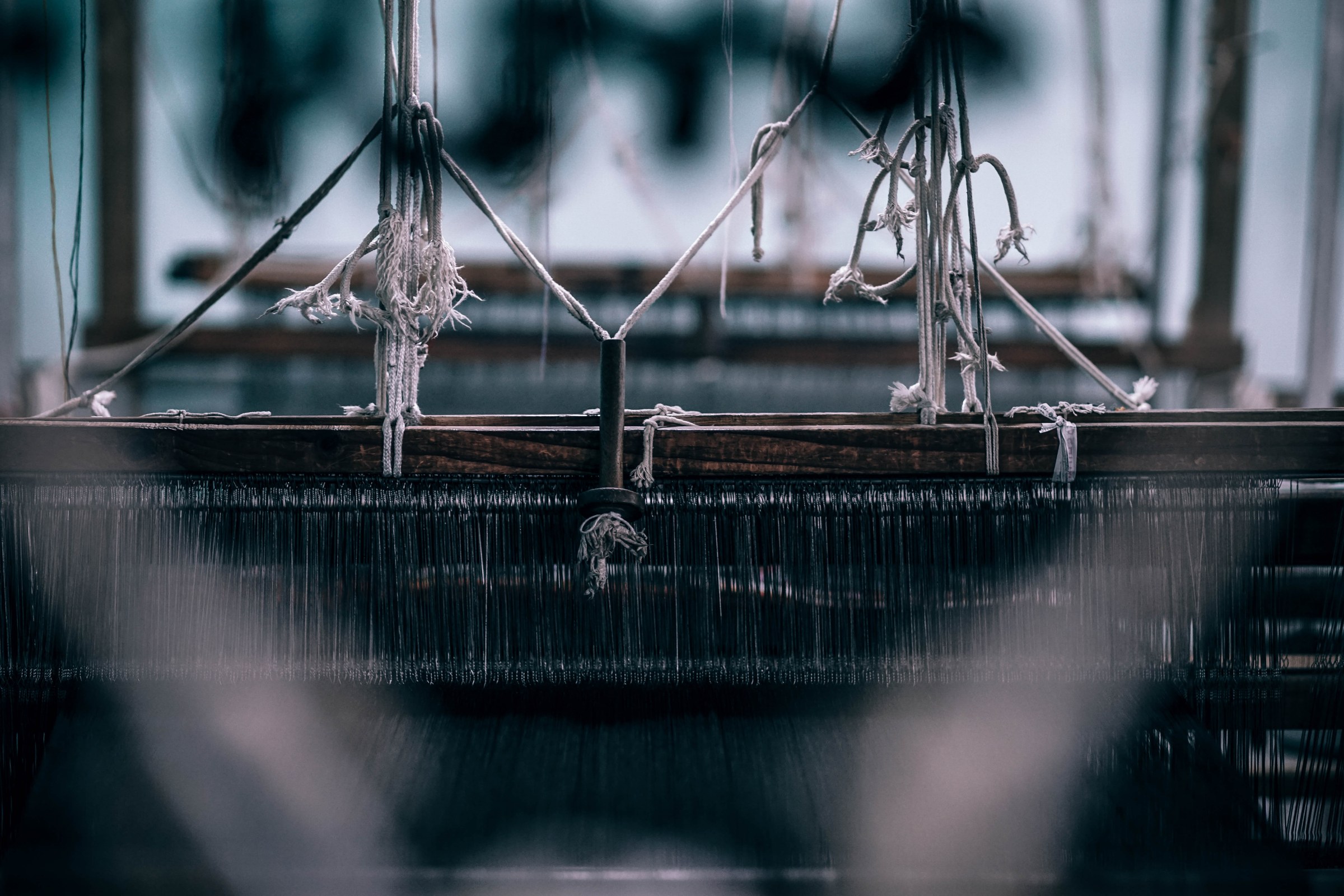
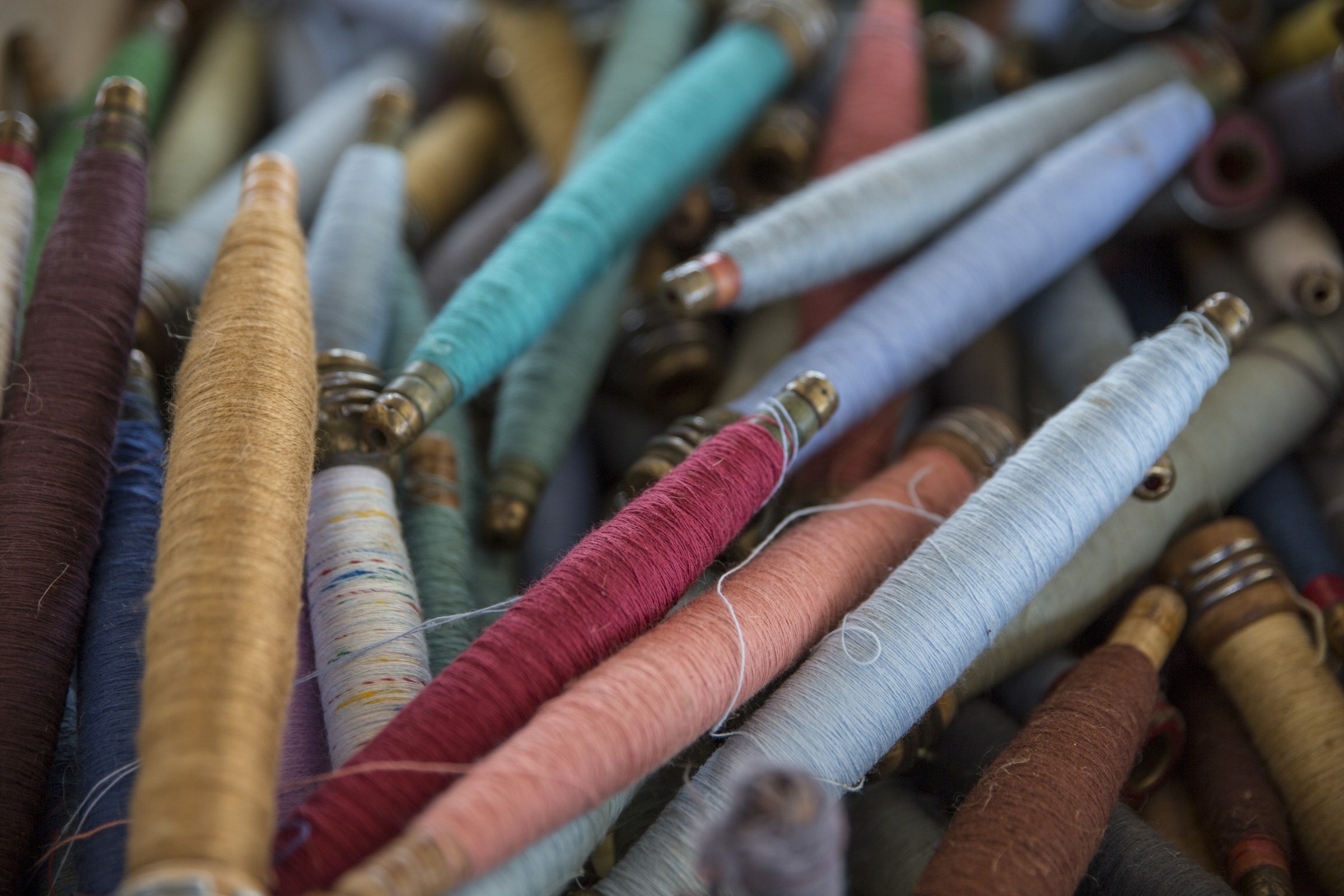
The mill runs four Dobcross box looms built between 1948 and 1961. They beat up more gently than a modern rapier loom, which is why the twill lines stay round; spares stopped being made decades ago, so we turn them ourselves. Everything in the book is woven on these four.
Dobcross box looms, 1948–1961
Widest cloth off the beam
Minimum for a bespoke warp
A 2/2 twill threaded to a point and reversed every six ends, in undyed moss and oat wool.…
Four indigo ends, four oat, in both warp and weft over a plain 2/2 twill. The houndstooth is…
Madder warp, oat weft, one over one under. The firmest binding there is, and a shot colour that…
Plain weave with the ends and picks paired: a 2/2 hopsack that drapes where tabby would stand up.
A five-end satin with the binding points scattered so no two touch. Nothing interrupts the light, which is…
A 3/1 warp-faced twill: three warp ends up to every one down, so the indigo warp owns the…
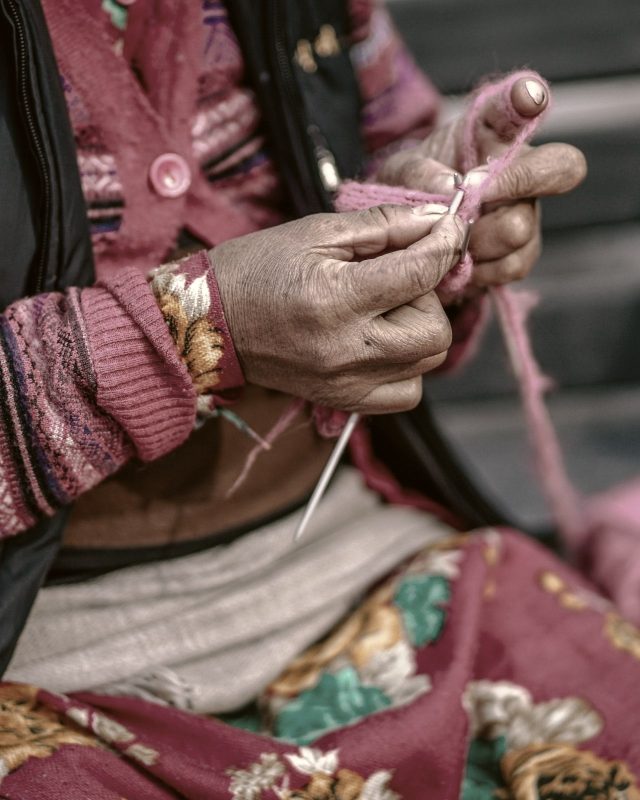
22 years at the mill
Draws every new cloth on paper before it goes near a loom, and can hear a broken end from the…
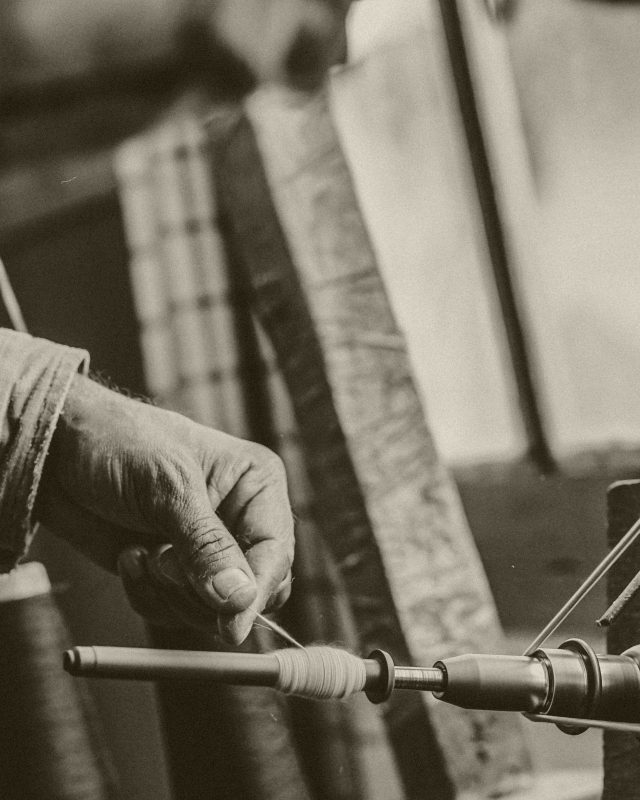
31 years at the mill
Keeps four Dobcross looms from the 1950s running, and machines the parts nobody makes any more.
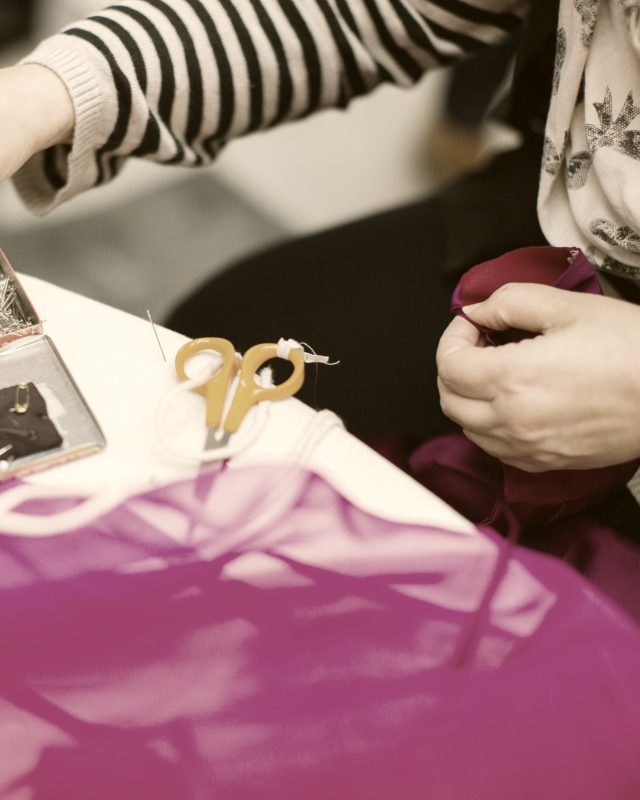
9 years at the mill
Runs the indigo and madder vats, and matches to standard under three different light sources before a lot is signed…
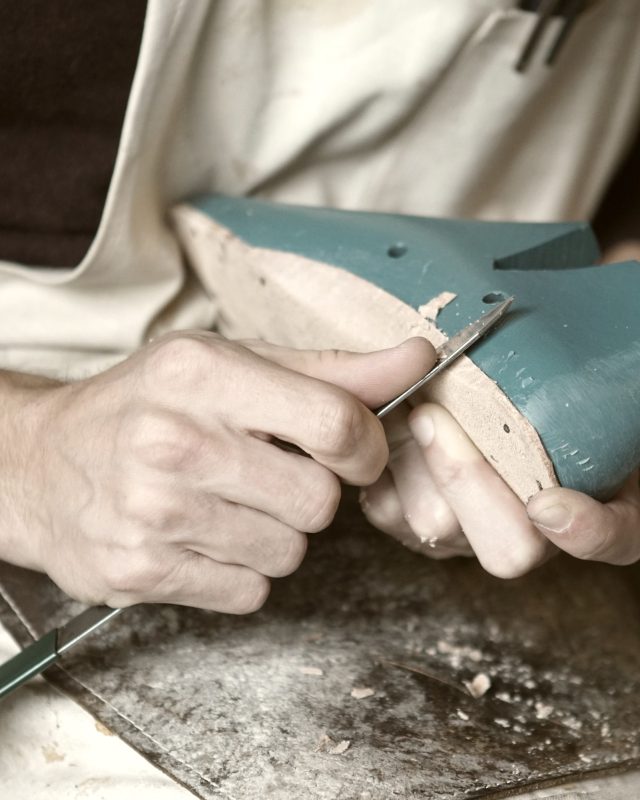
14 years at the mill
Scours, mills and crops. Decides how much a wool cloth is allowed to close up before it stops being the…
We send cuttings of anything in the book, free, anywhere. Tell us the end use and we will put in the two or three you did not ask for but should see.
Request cuttings